

When Strength Fails
Reflection on Psalm 73:26

My flesh and my heart may fail,
but God is the strength of my heart and my portion forever.
Psalm 73:26 (ESV)
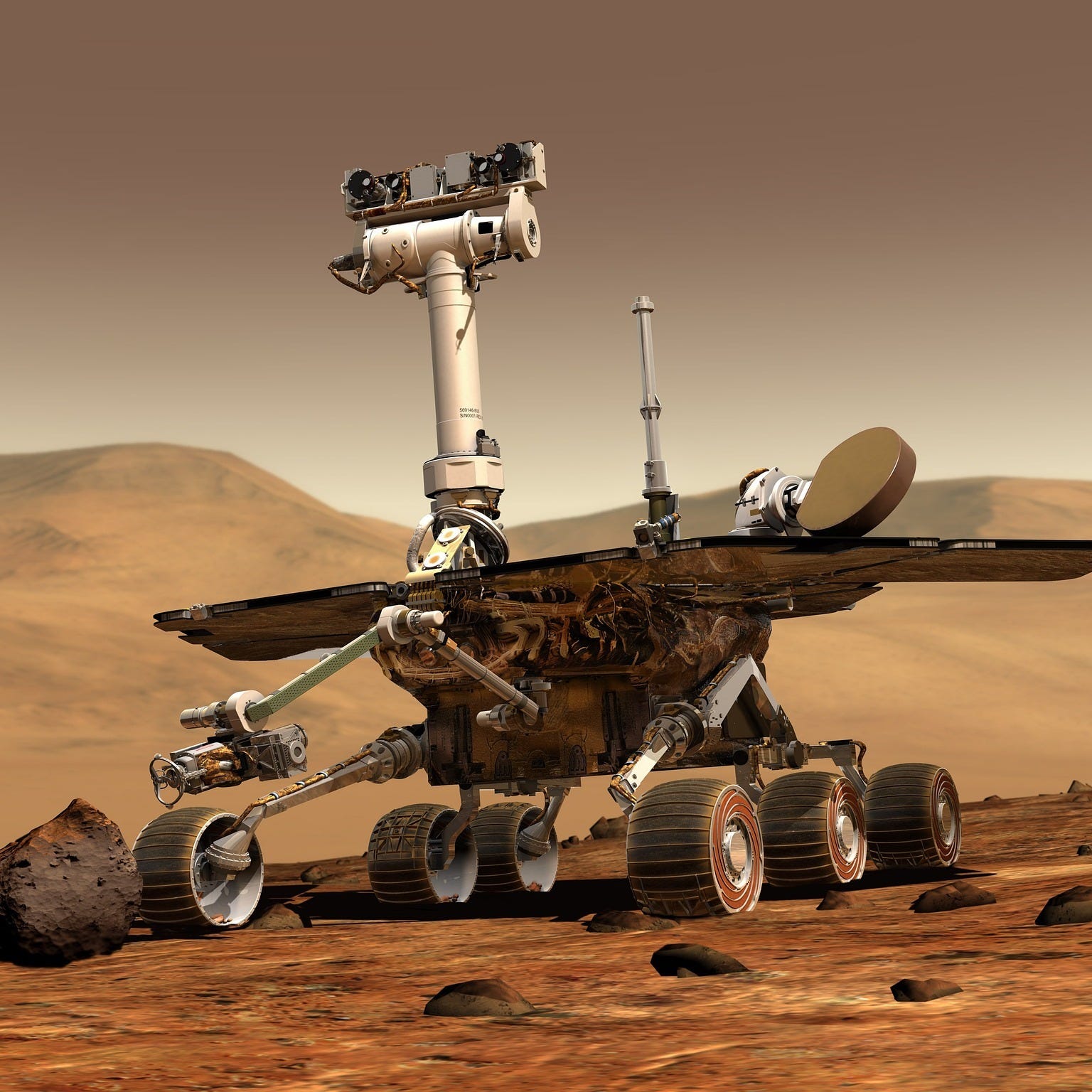
In 2004, NASA landed a robotic rover named Opportunity on the surface of Mars. The mission engineers designed the rover to last for ninety days. That was the expected lifespan of its mechanical systems under the harsh conditions of the Martian environment. Remarkably, Opportunity lasted nearly fifteen years.
For over a decade, the rover roamed the dusty surface of another world, sending back photographs, geological measurements, and scientific data. Its mission was clear: to act as a robotic field geologist and help scientists answer a fundamental question—did Mars once have liquid water on its surface?
Opportunity was not an accident of machinery. It was the product of meticulous planning and brilliant engineering. Every component had been designed with intention. Cameras, solar panels, wheels, and onboard computers were all carefully integrated to serve a singular mission. The rover’s operating systems and control programs ensured that its actions remained focused on the purpose for which it had been built. No one sets out to design a machine like that without thinking deeply about what it is meant to do.
Then in 2018, a massive dust storm swept across the entire planet of Mars. The sky darkened for months. Sunlight could no longer reach Opportunity’s solar panels, which meant the rover could not recharge its batteries. Eventually the rover fell silent.
NASA sent repeated signals, hoping to reestablish communication, but the rover never responded. Later, a science reporter analyzed Opportunity’s final transmission of telemetry data and translated the message into a hauntingly human phrase:
“My battery is low and it’s getting dark.”
Of course, the rover itself had no awareness of its own condition. It was only a machine, executing the code written by its designers. Yet the words resonate with us because they echo something profoundly human. They capture a moment when energy fades, strength weakens, and darkness begins to close in. But the story of Opportunity also reminds us of something else: purpose.
The rover existed because a team of engineers designed it with intention. Its mission was carefully defined long before it ever touched the surface of Mars. It was built to serve a purpose beyond itself.
In this sense, Opportunity reflects a principle that Scripture proclaims about humanity itself. If this is true of a manmade object, how much more should we expect that human beings bear the imprint of God’s divine purpose and mission, written into our spiritual DNA.
The Bible tells us that our lives are not accidental or purposeless. Long before we ever drew our first breath, God had already set His intention upon us. The apostle Paul put it like this:
Even as he chose us in him before the foundation of the world, that we should be holy and blameless before him. (Ephesians 1:4, ESV)
And the Lord tells the prophet Jeremiah:
Before I formed you in the womb I knew you, and before you were born I consecrated you. (Jeremiah 1:5, ESV)
Unlike the rover on Mars, human beings are not merely machines with a set of preprogrammed functions. We are creatures made in the image of God, endowed with souls and called into relationship with our Creator. These verses remind us that our lives are not random. God’s purposes for humanity as a whole—and for each of us individually—existed before the foundation of the world.
For centuries, Christians have summarized this truth through the famous opening question of the Westminster Shorter Catechism:
What is the chief end of man?
The answer is simple and profound:
Man’s chief end is to glorify God, and to enjoy Him forever.
This statement captures the purpose for human existence. We were created to reflect God’s glory through our lives and to delight in Him. A machine’s worth is intrinsically tied to its ability to perform the tasks assigned by its designers. Human worth, however, is not measured by output but by relationship with the One who made us.
The psalmist expresses this beautifully in Psalm 73:
You guide me with your counsel,
and afterward you will receive me to glory.
Whom have I in heaven but you?
And there is nothing on earth that I desire besides you.
My flesh and my heart may fail,
but God is the strength of my heart and my portion forever.
(Psalm 73:24–26, ESV)
Those words acknowledge our deepest longing: to know and be known by God. They also recognize something every one of us eventually experiences—our strength does not last forever.
Our flesh and heart fail.
Our energy fades.
One day, each of us will reach a moment when our earthly strength begins to run out. Our bodies weaken, our time grows short, and the horizon of this life grows dim.
In that sense, we all eventually arrive at a moment not unlike Opportunity’s personified sign-off.
“My battery is low, and it’s getting dark.”
But here the story of the rover and the Christian believer begin to part ways.
Opportunity now sits silently as junkyard scrap on the surface of Mars. Its cameras will never capture another image. Its wheels will never turn again, leaving behind a veiled monument to human ingenuity.
The Christian’s mission extends far beyond the limits of this earthly life. Our hope rests in the resurrection of Jesus Christ. When Christ died, darkness seemed to have won. His body lay in the grave, and the light of the world appeared to be extinguished.
But that darkness did not last.
As the hymn In Christ Alone beautifully reminds us:
There in the ground His body lay,
Light of the world by darkness slain.
Then bursting forth in glorious day,
Up from the grave He rose again.
Because Christ rose from the dead, those who belong to Him share in that same promise. The weakening of our earthly bodies is not the end of the story. The darkness that eventually surrounds every human life is not final.
Psalm 73 gives us the assurance that even when our flesh and heart fail, God remains our portion forever.
Opportunity’s mission eventually ended in silence on the dusty plains of Mars.
But the mission for which God created us does not end when our earthly strength fades.
We were made to glorify Him.
We were made to enjoy Him.
And through Christ, we are promised something that no machine will ever experience: life eternal that continues beyond the darkness and into the presence of our immortal God and heavenly Father—the One who “dwells in unapproachable light” (1 Timothy 6:16, ESV).
Thank you, Vic for the Good Word.
Thank you Vic. I do appreciate and love reading these