

Sinai and Zion: A Tale of Two Mountains
Reflection on Hebrews 12:14-29

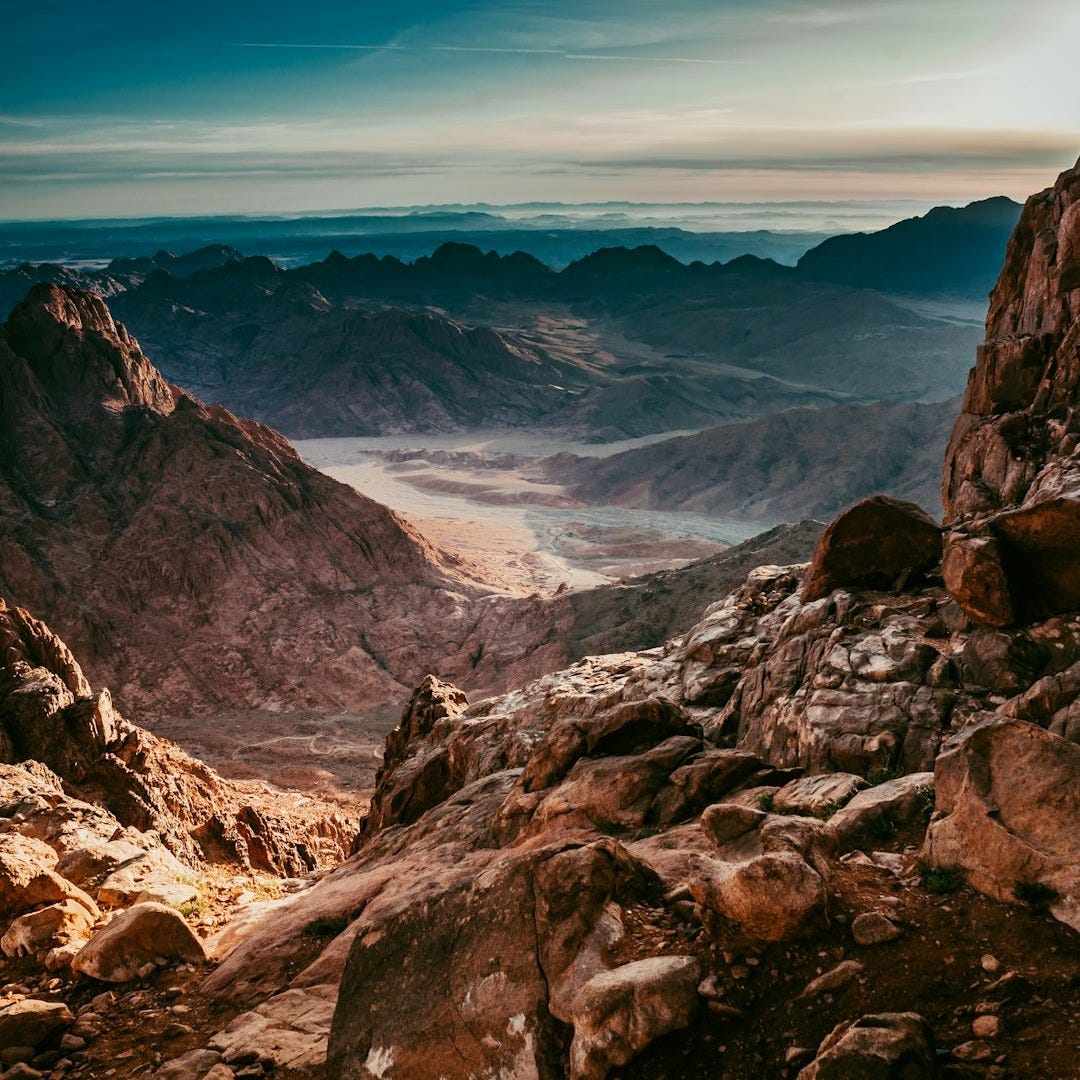
As I return to the study of Hebrews this week, I’m struck again by the weight and wonder of what the writer sets before us. In verses 18 through the end of the chapter, we are reminded of the dreadful experience of Israel at Mount Sinai. The scene was dark, ominous, and filled with terror. Thunder, fire, and the blast of a trumpet signaled God’s holy severity and righteous wrath. Strict boundaries were drawn—no one was to touch the mountain or approach without permission. Even Moses, God’s chosen mediator, could not ascend on his own terms or without invitation. In that moment, God’s holiness was wholly unapproachable. Because sin was not yet permanently atoned for through the blood of Christ, God’s consuming fire would destroy anyone who drew close apart from His command. Moses was the singular exception, and yet he too was terrified, as the writer of Hebrews recounts Moses’ own words: I tremble with fear” (Hebrews 12:21).
This pattern is familiar across the Scriptures. Many of the prophets open their messages with clear indictments of sin and proclamations of divine judgment. Even the tender revelation of God’s character in Exodus 34:6–7—declaring Him to be “merciful and gracious, slow to anger, abounding in steadfast love and faithfulness, forgiving iniquity and transgression and sin”—is followed immediately by the reminder that He “will by no means clear the guilty.” His love and mercy never diminish His justice, and His justice never cancels His love. This is one of the continuous themes in Hebrews (see behold the kindness and severity of God). The God of Sinai is the God who reveals Himself in covenant grace, but He does so without softening the reality of His absolute holiness. Both are perfectly balanced attributes of His immutable character.
Yet the message of Hebrews presses beyond Sinai’s terror to the greater mountain—Mount Zion—to which we now come, “to the city of the living God.” Those who are in Christ do not stand at the foot of fire and judgment, but before the heavenly Jerusalem. We gather among “innumerable angels in festal gathering…and the spirits of the righteous made perfect.” The unapproachable God of Exodus now draws near, having revealed Himself in Christ and completely satisfied His wrath in Him. The consuming fire that once threatened death now purifies, sanctifies, and welcomes. We are free to enter God’s presence—and to do so with confidence. This present reality was foretold by the prophet Zephaniah, who gave voice to the joy that awaits believers on the other side of judgment:
The LORD your God is in your midst,
a mighty one who will save;
he will rejoice over you with gladness;
he will quiet you by his love;
he will exult over you with loud singing.
(Zephaniah 3:17)
Judgment is not God’s final word for His redeemed people. He has turned our sorrow into joy and our mourning into dancing (Jeremiah 31:13; Psalm 30:11). Where once there was trembling, there is now singing—with God Himself joining in and rejoicing over His children with loud delight. This is such an amazing and wonderful truth to behold, and one that should make us exceedingly humble, thankful, and glad.
Having established that shift—from Sinai’s dread to Zion’s delight—it is fitting to circle back to Hebrews 12:14–17, where we are reminded that redemption is not only a change of standing, but a change of heart. Having been made new creatures in Christ, we are summoned by the writer to “strive for peace with everyone” and to pursue holiness as those who have been regenerated by the grace of God and empowered by the Holy Spirit. We are warned not to withhold forgiveness or allow bitterness to take root. Those who have been shown mercy must show mercy. Those who have been forgiven must forgive. Those who have been loved must love. Having received such marvelous grace, we are reminded to bear the communicable attributes of our God: slow to anger, gracious and merciful, abounding in steadfast love.
Daily, then, let us remember both mountaintops as God has faithfully delivered us from Sinai’s terror to Zion’s comfort. We would be wise never to minimize our sin, nor to forget the judgment we deserved as those born in iniquity. We will never fully comprehend God’s mercy and grace so long as we cling to the illusion that we are inherently good. As Romans reminds us, “no one is righteous—no, not one” (3:10), “for all have sinned and fall short of the glory of God” (3:23). But praise be to God, the full weight of His wrath fell on Christ, who bore it undeservedly on our behalf. We were all stubborn, stiff-necked, and sinful until God graciously apprehended us by His mercy and made us His own, imputing to us the perfect righteousness of Christ so that we might stand before Him holy, blameless, and unashamed.
For the wages of sin is death, but the free gift of God is eternal life in Christ Jesus our Lord. (Romans 6:23, ESV)
And so we rejoice—not with presumption, but with awe. The God who once descended in fire now dwells with us through Jesus, our Immanuel. The Holy One who once kept His distance from sinful man now invites us to draw near in confidence. The voice that once thundered from Sinai now rejoices over us with gladness and sings over those He has redeemed.
The LORD your God is in your midst,
a mighty one who will save.