

Putting Off the Old, Putting On the New
Reflection on Colossians 3:5–17; Ephesians 4:17–32

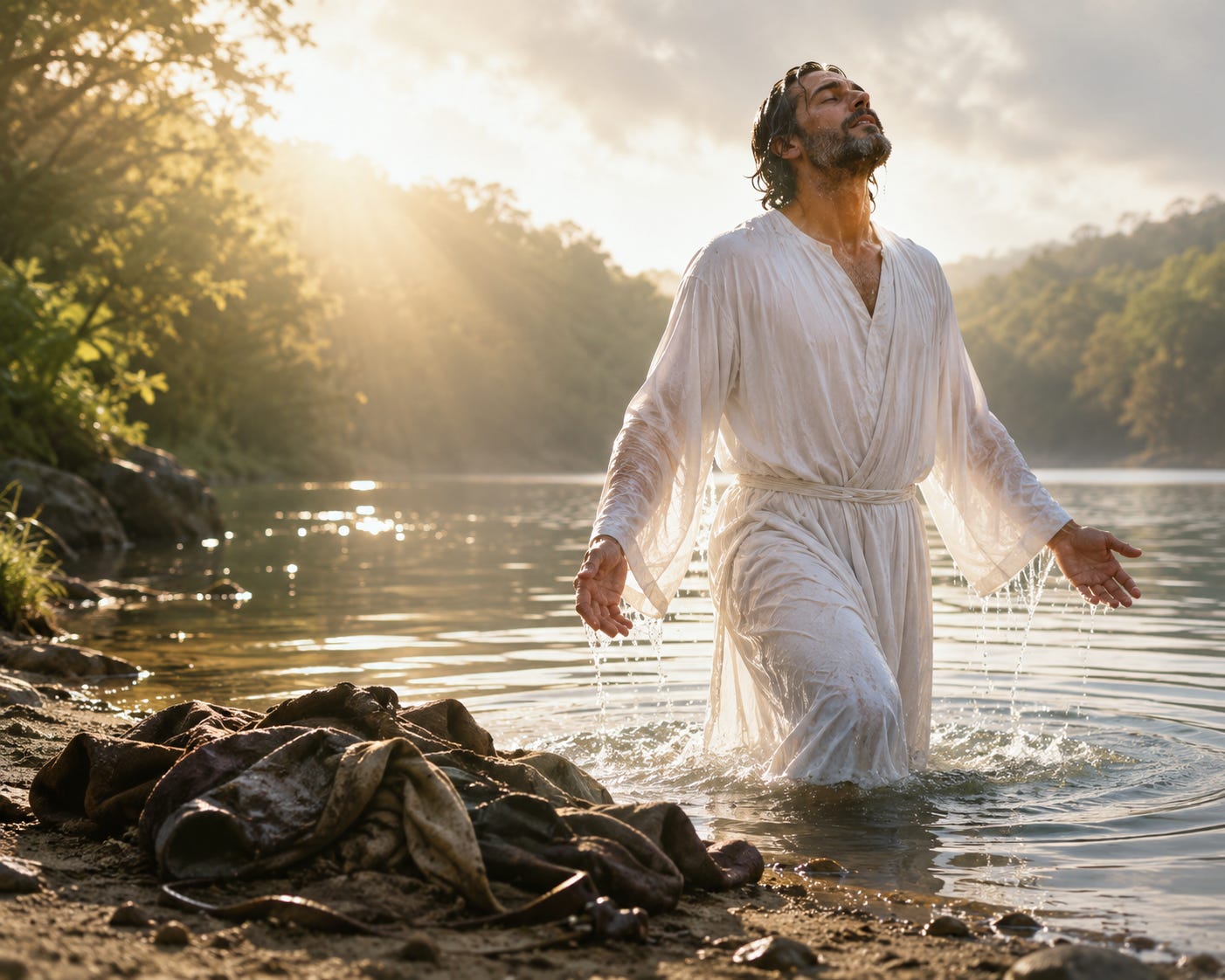
“You have put off the old self with its practices and have put on the new self, which is being renewed in knowledge after the image of its creator.”
(Colossians 3:9-10).
One of the great mistakes we make in the Christian life is assuming that holiness is primarily about behavior modification. Taken together, Colossians 3 and Ephesians 4 present something much deeper. Paul describes sanctification as a twofold process: putting off the old self and putting on the new.
His lists of sins—sexual immorality, impurity, covetousness, anger, lying, corrupt speech, bitterness, and many others—are descriptive, not exhaustive. They remind us that the fallen human heart has an almost limitless capacity for wandering from God. Left unchecked, sinful desires become deeply ingrained habits and, at times, powerful strongholds that seek to rule our hearts.
The older commentators often described Paul’s command as the call to mortify the flesh. Matthew Henry frequently used that expression, echoing Paul’s words that “those who belong to Christ Jesus have crucified the flesh with its passions and desires” (Galatians 5:24). Mortification is not merely suppressing sinful behavior. It is putting to death the very patterns and desires that continually pull us away from Christ.
Imagine a large jar filled with dark, foul, contaminated water. There is only one way to make it clean. Fresh, pure water must flow into it until, little by little, the polluted water is displaced. Eventually, what was once dark and contaminated becomes clear because the old has been replaced by the new.
That image takes me back to my childhood in the 1960s. I vividly remember television commercials showing polluted rivers and lakes. One commercial in particular has never left me. A Native American paddled silently through a trash-filled waterway. As the camera closed in, a single tear rolled down his cheek. Even today, I cringe whenever I see someone casually throw litter from a moving vehicle. Such disregard for God’s creation reflects something deeper than carelessness. Scripture often describes that same inward condition with words like callous, seared, heartless, and without self-control (Ephesians 4:19; 1 Timothy 4:2; 2 Timothy 3:3).
Yet before we become too quick to condemn others, we must remember that every one of us carries within us the same fallen nature. “There but for the grace of God go I.” Sin rarely appears ugly at first. It disguises itself as harmless, reasonable, even desirable. But left unchecked, it gradually pollutes the heart, just as surely as toxic waste contaminates a river or litter slowly scars a beautiful landscape.
I grew up spending time on the Chesapeake Bay, and I remember firsthand the concern surrounding the deteriorating condition of Lake Erie. Both had become national symbols of environmental neglect. Their restoration did not happen overnight. The sources of pollution first had to be addressed. Then, over time, clean water flowing from countless fresh headwaters gradually flushed away years of accumulated contamination. Slowly, life began to return.
That is a beautiful picture of sanctification.
God first calls us to cut off the source. We put to death the habits, desires, and idols that continually feed our sinful nature. This is often painful because sin promises immediate pleasure while concealing its long-term bondage. Left unchecked, sinful desires become deeply ingrained habits and, at times, powerful strongholds that rule our hearts.
Idolatry rarely appears in a single dramatic moment. More often, it quietly grows as lesser desires are gradually elevated until they occupy the place that belongs to God alone. James describes this progression well: desire conceives, gives birth to sin, and when fully grown, sin brings forth death (James 1:14–15). Likewise, the mortification of our idolatrous strongholds isn't usually accomplished all at once. Though it requires decisive acts of repentance and obedience, lasting freedom is ordinarily found through the daily, Spirit-enabled work of putting off the old self. Yet mortification of the flesh is not God’s final goal. His purpose is to make increasingly visible the life of Christ already at work within us, which Paul describes as putting on the new self.
The Christian life is not merely about saying “no.” It is equally, and perhaps even more importantly, about saying “yes.”
After putting off the old self, we are called to put on the new self, “created after the likeness of God in true righteousness and holiness” (Ephesians 4:24).
Stop lying—and begin speaking truth.
Let the thief steal no longer—but work honestly with his hands so that he may have something to share with those in need.
Put away corrupt speech—but use your words to build others up with grace.
Lay aside bitterness, wrath, anger, and malice—and become kind, tenderhearted, forgiving one another, just as God in Christ forgave you.
This is why sanctification is not primarily subtractive. It is most powerfully transformative through addition. The Christian life is not defined simply by all the things we stop doing. It is defined by our growing conformity to Christ as we are rooted and built up in Him. As the old self is put to death, the new self grows stronger through the steady inflow of God's truth and grace.
Just as polluted waters are restored by the continual flow of fresh headwaters, so our hearts are renewed through the ordinary rhythms of discipleship. Day by day we immerse ourselves in God’s Word, commune with Him in prayer, gather with His people in worship, sit under the faithful preaching and teaching of Scripture, and encourage one another in Christian fellowship. These are not religious obligations to be checked off a list. They are God’s appointed channels through which He continually renews our minds, reshapes our desires, and conforms us to the image of Christ.
Healthy lakes do not remain healthy because they were once cleaned. They remain healthy because fresh water never stops flowing. The same is true of the Christian life. If we neglect these life-giving streams, our spiritual lives inevitably stagnate. The old desires of the flesh, together with the countless influences of the world around us, gradually begin to seep back into our hearts. But where the living water of God’s grace continually flows, purity is preserved, faith is strengthened, and Christ increasingly becomes visible in us.
Isaiah beautifully describes this new identity:
“He has clothed me with the garments of salvation; He has covered me with the robe of righteousness... For as the earth brings forth its sprouts, and as a garden causes what is sown in it to sprout up, so the Lord GOD will cause righteousness and praise to sprout up before all the nations.” (Isaiah 61:10–11)
As I write these words, I do so with no illusion that I have mastered them. I remain a fellow pilgrim, daily engaged in the same battle against the flesh and its deceitful desires. This meditation is as much a sermon to my own heart as it is an encouragement to anyone else who may read it.
Yet I also write with hope. The old man has been crucified with Christ, and by His grace I have been raised to walk in newness of life. My daily calling is not to create a new identity but to live faithfully in the one Christ has already given me. That is the hope of sanctification: not striving to become someone God might someday accept, but learning each day to live out the new identity He has already given us in Christ.
Prayer: May God, who began this good work, be faithful to complete it. May He help me each day to cut off every source of spiritual pollution, to delight in the fresh waters of His Word, to walk in prayer and fellowship with His people, and to clothe myself anew with the righteousness of Christ. And may my life increasingly reflect not who I once was, but who, by His grace, I already am in Him.